What is ERP PIM?
A lightweight product information management system for centralizing product content, specifications, images, and multi-channel listing setup.
Product data without the spreadsheet sprawl
ERP PIM gives teams a practical product information workspace: product records, structured attributes, variants, images, SEO fields, and channel-specific listing setup, all in one interface that is easier to operate than scattered spreadsheets and repeated marketplace edits.
Mei is the merchandiser behind this week's new bottle launch. She cleans up the master product record once, then the marketplace operator keeps the same SKU while shaping a richer branded story for Shopify and a shorter, faster, conversion-led version for TikTok Shop.
Quick answers
A lightweight product information management system for centralizing product content, specifications, images, and multi-channel listing setup.
Merchandising, ecommerce, brand, and marketplace teams that need cleaner product data without a heavyweight enterprise rollout.
It is self-hosted, easier to evaluate, and shaped around day-to-day catalog operations, including the real-world need to present the same product differently across Shopify, TikTok Shop, and other channels.
Who this is for
Use ERP PIM when product naming, attributes, and positioning need one controlled source instead of multiple spreadsheets.
Guide operators through store URLs, credentials, callback URLs, and listing overrides with a workflow that is easier to follow across Shopify, WooCommerce, TikTok Shop, Shopee, and more.
FastAPI, SQLite, and a simple release zip make evaluation and self-hosted rollout realistic for small internal teams.
Why teams install it
Teams can edit products, manage attributes, and prepare channel content without bouncing between disconnected tools.
Variants, images, SEO, tags, and listing overrides keep product information ready for storefronts and marketplaces, even when the same SKU needs a different tone or title in each platform.
Run it as a lightweight self-hosted web app with demo data included for first-run evaluation.
Operational flow
Imagine a merchandiser preparing one new bottle launch. The base product record, structured attributes, images, and variants are created once in ERP PIM. Then the marketplace operator keeps the same SKU, but shapes the listing differently for Shopify and TikTok Shop without breaking the product master data.
Set SKU, descriptions, pricing, SEO, brand, category, and supplier in one place.
Turn free-form product notes into reusable fields like color, capacity, material, and variant combinations.
Assign images, primary visuals, and channel-specific listing overrides without redoing the product from scratch, such as a branded Shopify narrative versus a shorter TikTok Shop conversion angle.
Use guided channel onboarding and simple user roles so non-engineering teammates can still get the work done.
Product tour
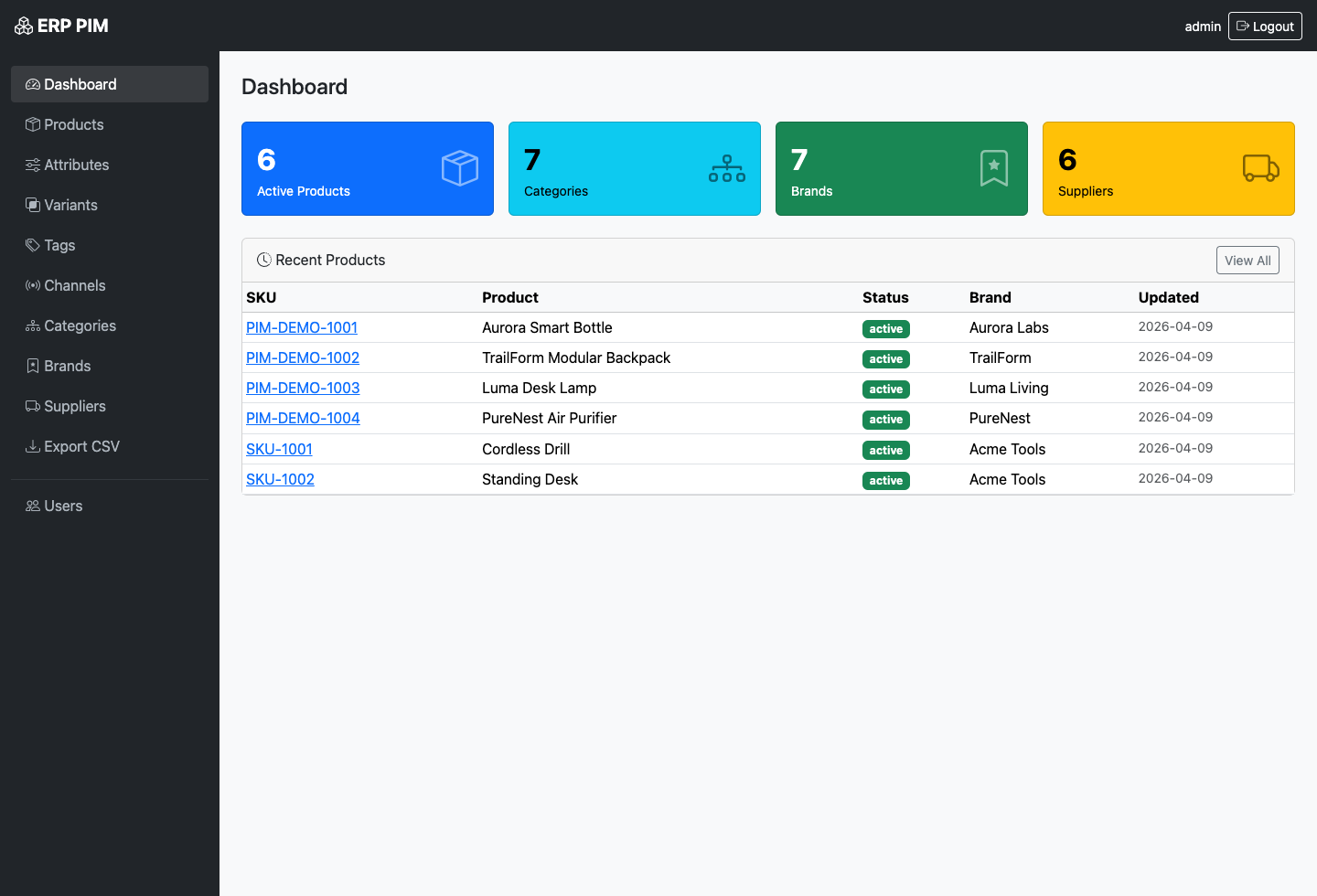
Open the app and immediately see catalog volume, active products, and recent updates.
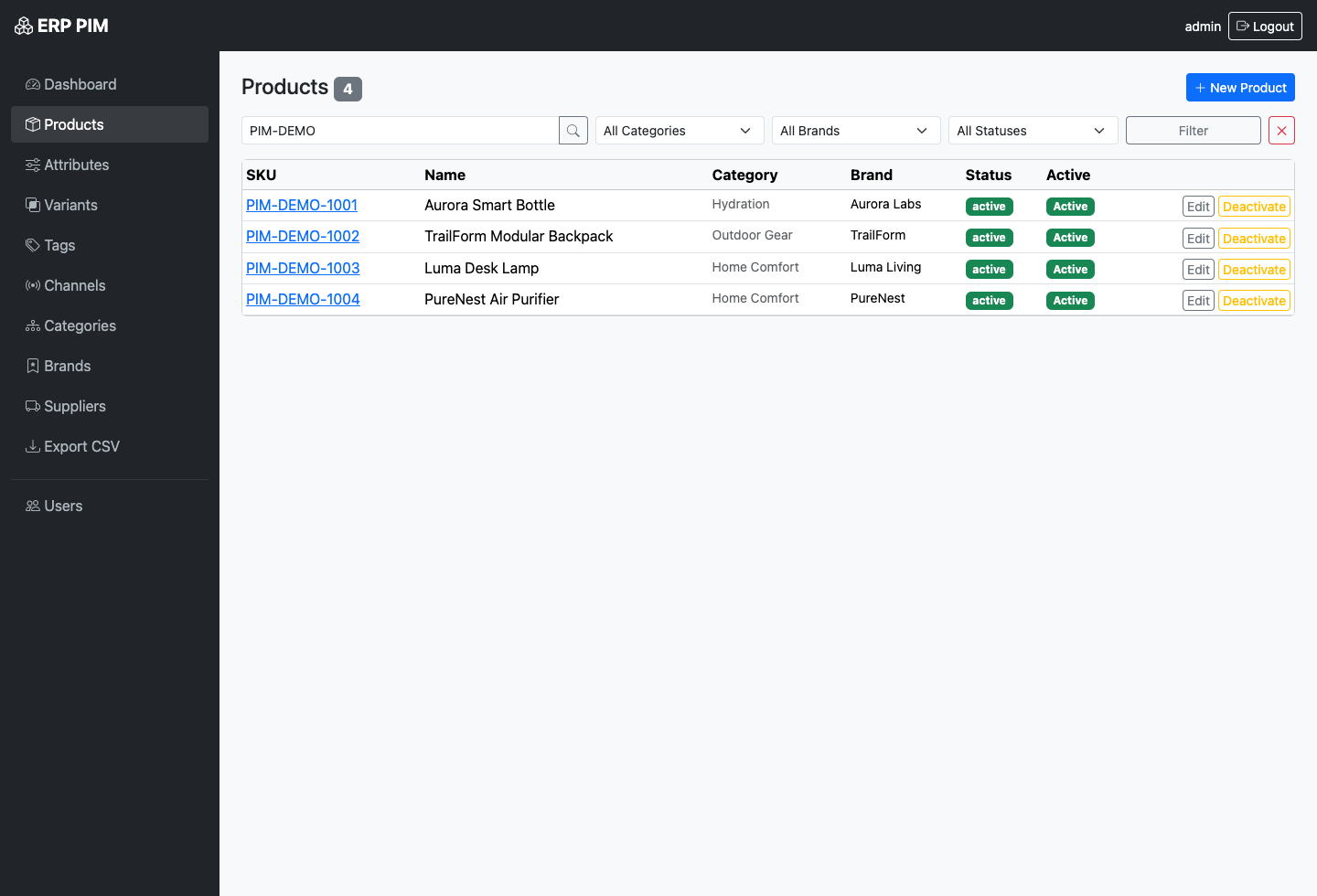
Searchable product records with SKU, category, brand, and lifecycle visibility.
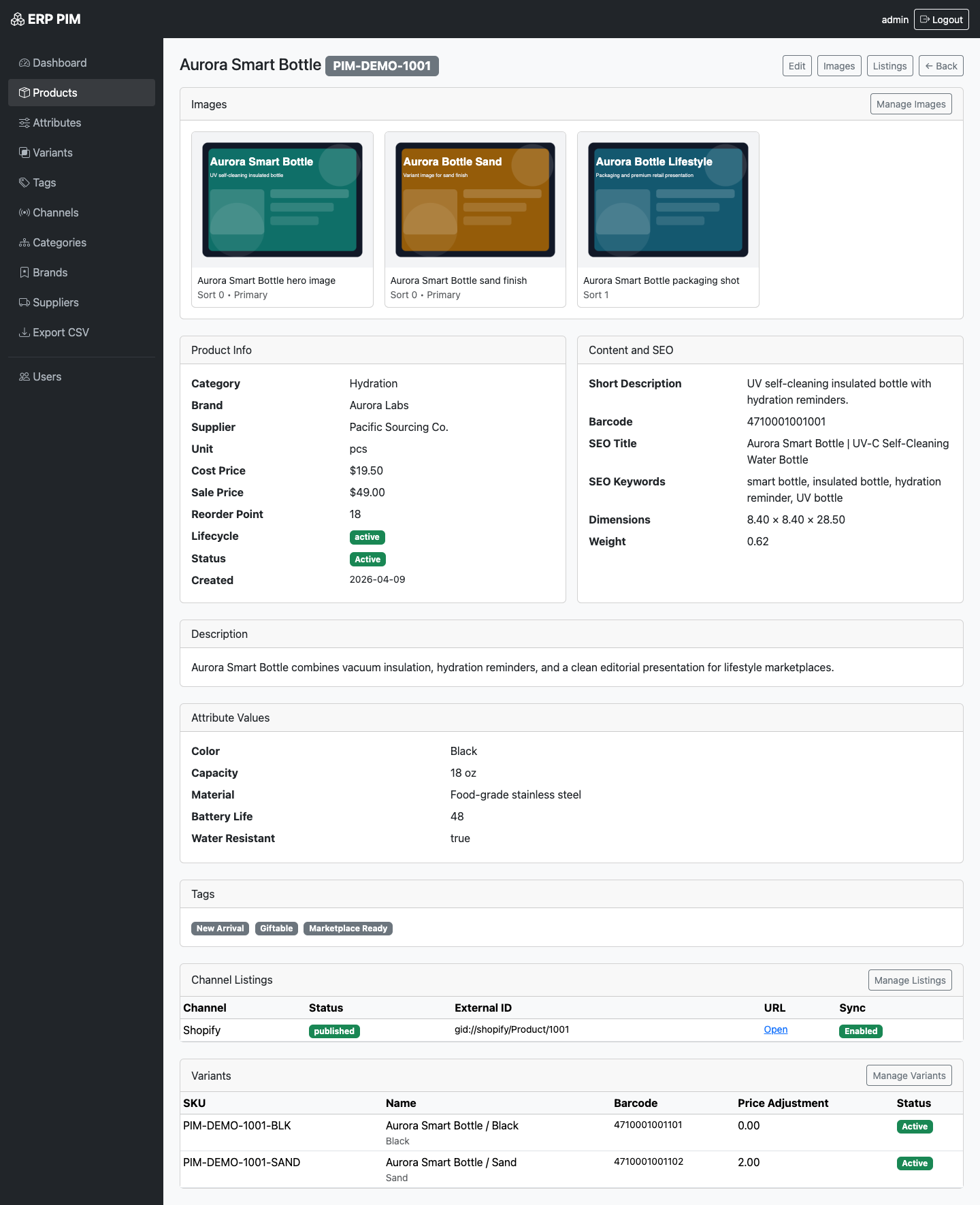
See content, attributes, tags, variants, and channel listings in one product view.
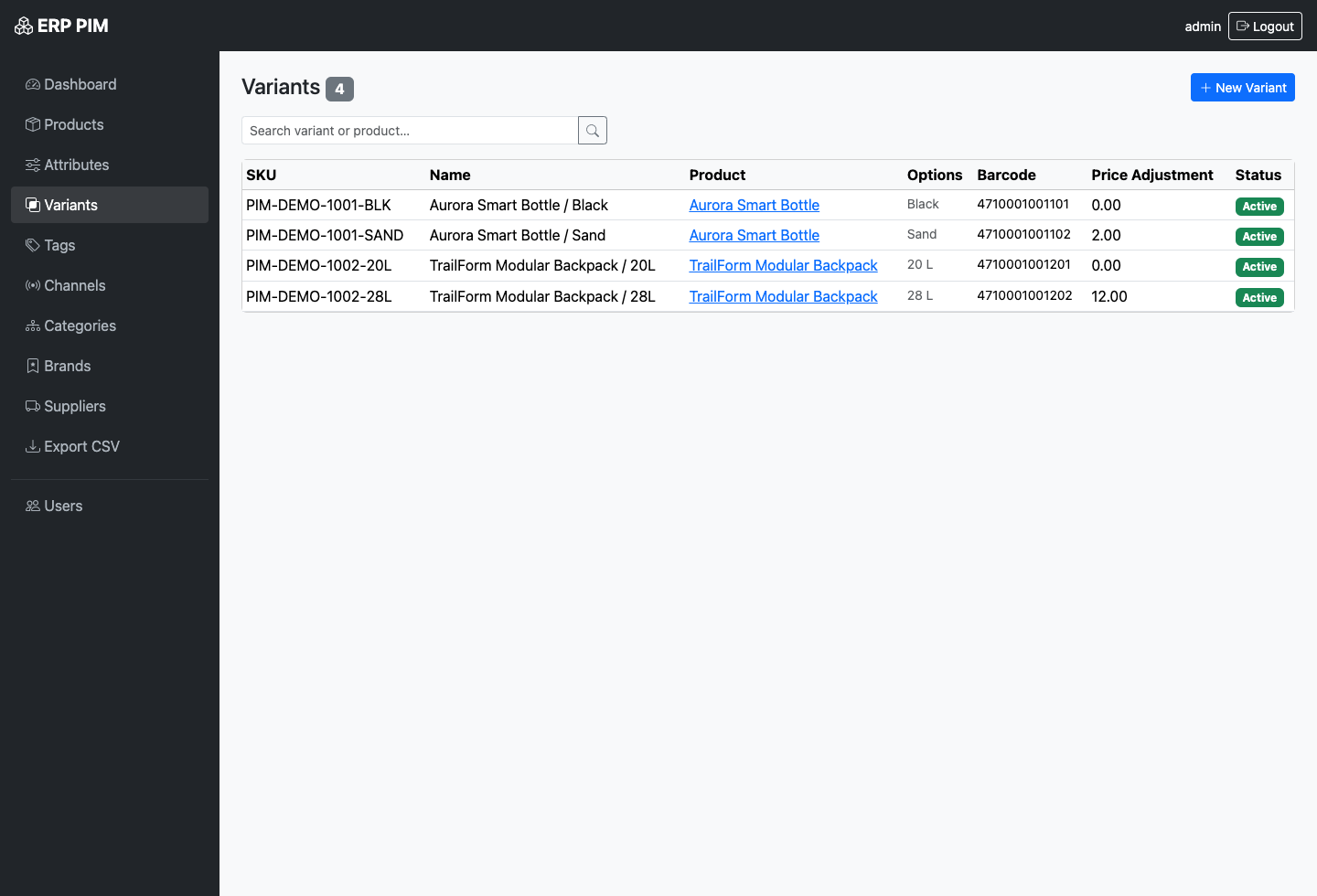
Standardize specifications and turn them into reusable product options.
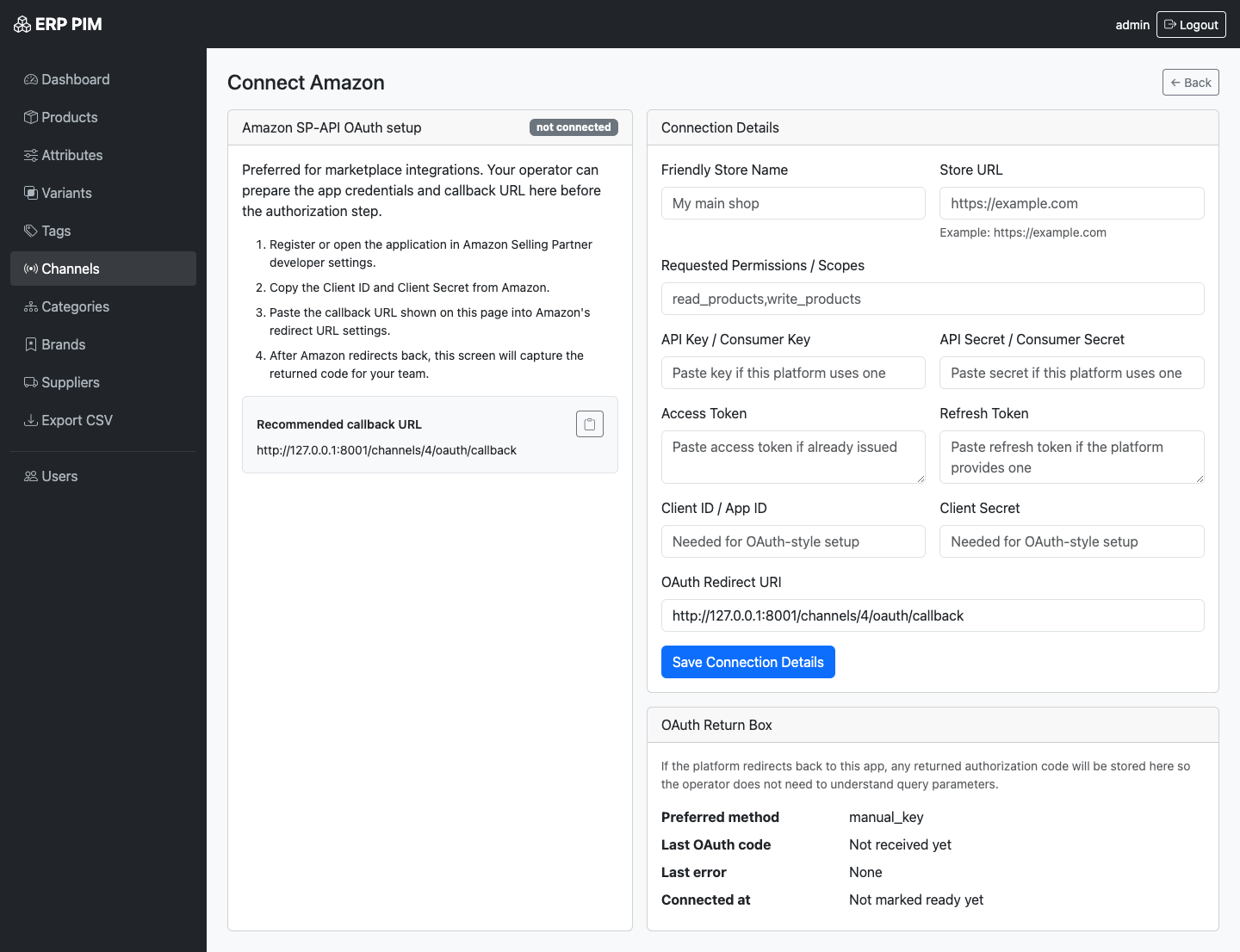
Guide operators through marketplace connection steps with examples and callback support, then adapt one product for different platform contexts.
Operational fit
Why this page matters
Deployment
docker compose up -dERP PIM is positioned for fast self-hosted evaluation. Use Docker Compose as the default startup path so teams can bring the app up with a single, familiar command.
If your team does not want to wait for the full roadmap, you can already download the current version, self-host it, and extend it over time with your internal team or AI agents.
Default login: admin / admin@12345
Change secrets and credentials before production use.
FAQ
Yes. ERP PIM is built for that use case. A product can keep one master record while Shopify uses a richer branded description and TikTok Shop uses shorter, faster, more conversion-oriented wording.
Picture Mei leading a new launch this week: she prepares the product once, adds structured attributes and images, then the channel operator keeps the SKU the same while shaping the Shopify version around brand narrative and the TikTok Shop version around quick conversion messaging.
ERP PIM is still under active development. If your team does not want to wait for the full roadmap, you can already download the current version, self-host it, and extend it further with your internal team or AI agents.
No. The current story is strongest for small and mid-sized teams that need better product data control without a heavyweight PIM implementation project.
ERP PIM manages product master data and channel content, while ERP IMS handles stock, warehouses, purchasing, and inventory operations.
Yes. Product, attribute, image, and channel setup flows are designed to be workable for merchandising and marketplace teams, not only developers.
Channel API depth, approval workflow, backup strategy, and the operational model between PIM and IMS before broader rollout.
Next step
This version tells a clearer story: what ERP PIM is, who it is for, what it replaces, how it deploys, and why a merchandising team can evaluate it without waiting on a large systems project.